To turn a book into an animated film with AI, you treat the book as the screenplay it secretly is: pick a passage with strong scenes, cast its characters as fixed visual references, break chapters into scenes and shots, and produce them one scene at a time in a style the story can live in. Public domain classics are the natural place to start, because the adaptation rights problem disappears entirely.
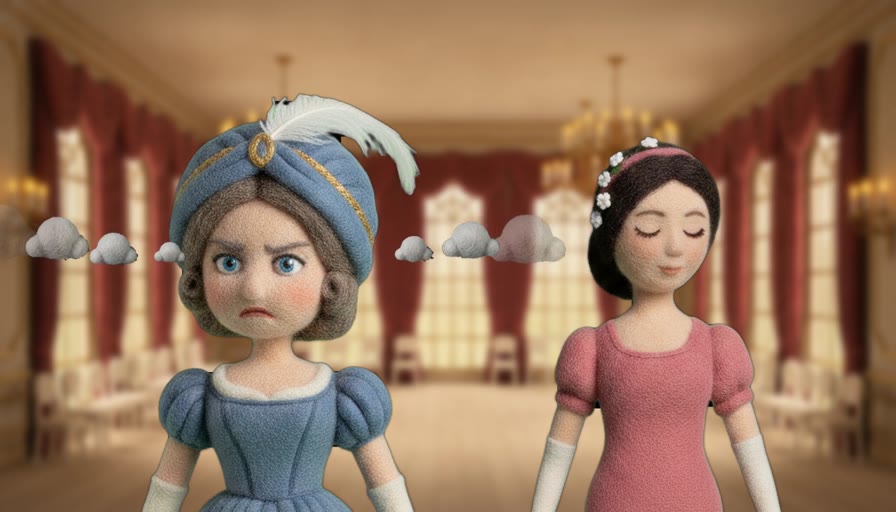
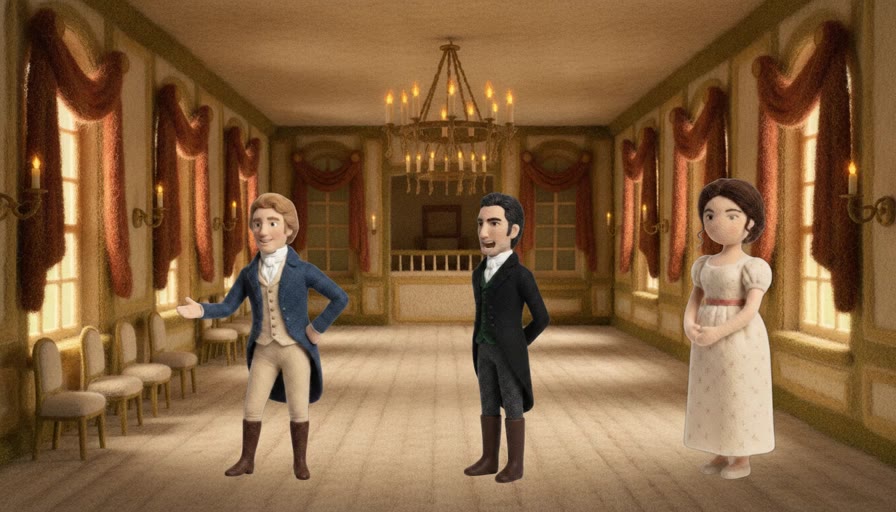
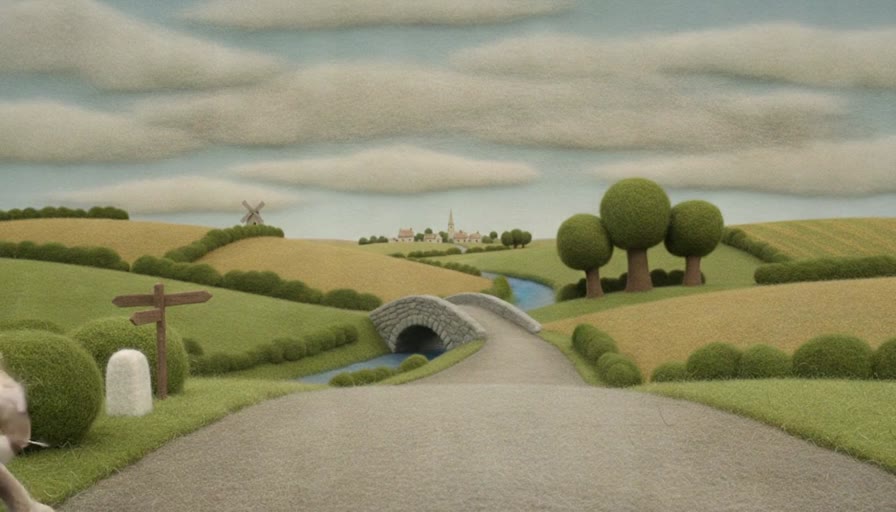
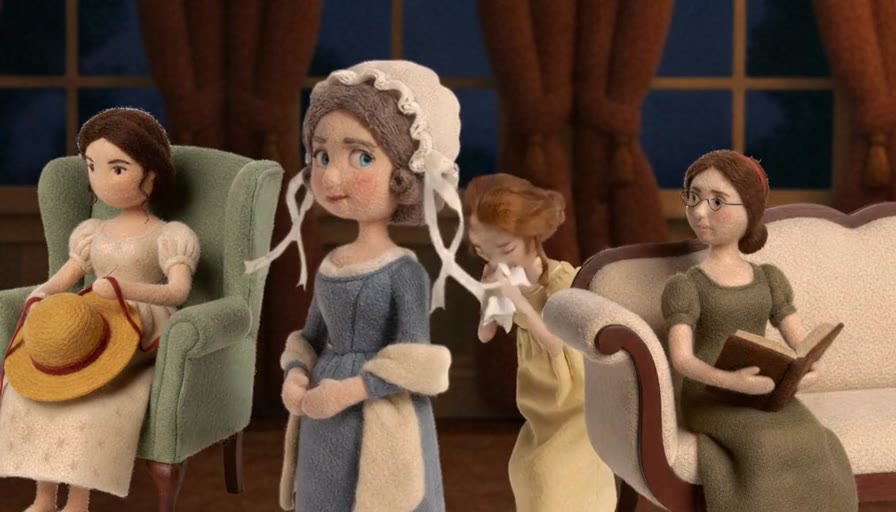
This page's method is not hypothetical; it is how a serialised Pride and Prejudice adaptation is being made. Here is a scene from it being built and narrated, from typed beats to the rendered ride-off:
And frames across the wider film. Regency interiors, a consistent Darcy, felt and wool textures the period wears surprisingly well:
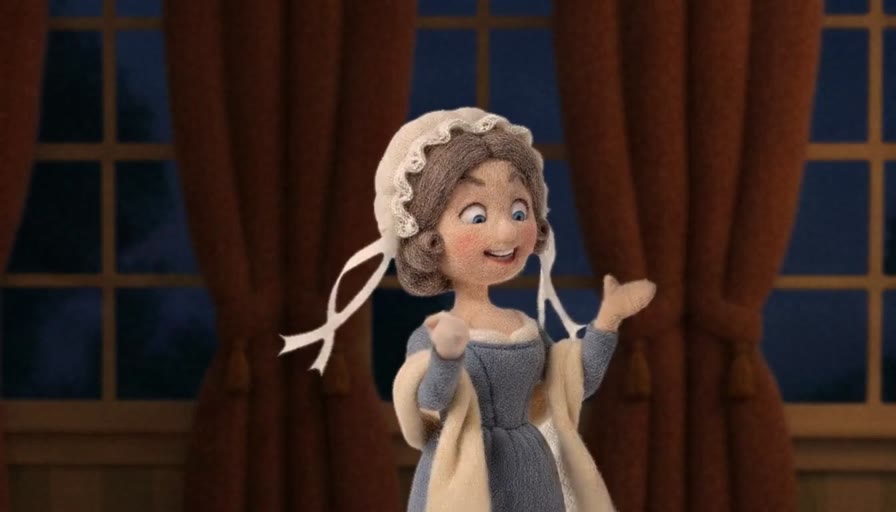
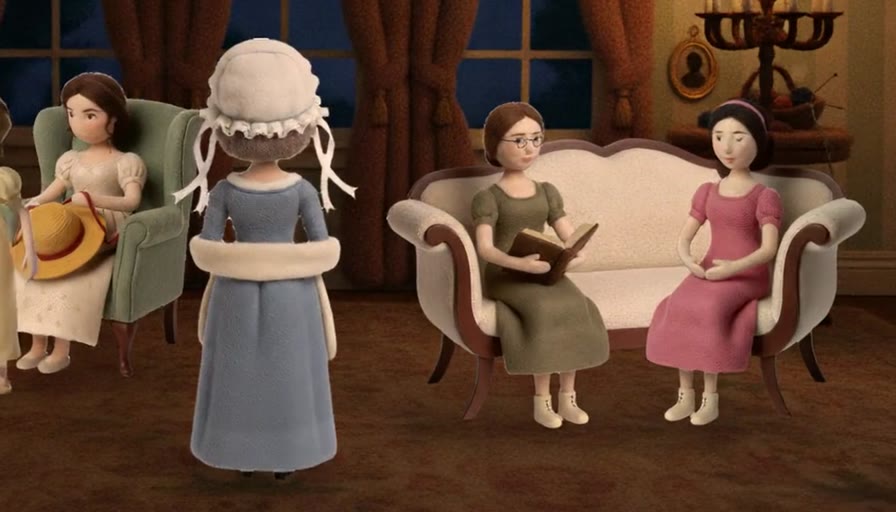
An in-copyright novel needs the author's or estate's permission before your adaptation can be shown anywhere, and that is a negotiation, not a formality. The public domain, roughly pre-1930 works in the US plus everything older, is a bottomless shelf of proven stories: Austen, Verne, Carroll, Grimm, Homer. Nobody bills you for Elizabeth Bennet.
This is why AI adaptation folk wisdom says start classic. It is not aesthetic conservatism; it is that the legal surface area of a 200-year-old book is zero.
Prose does three things film does in one: describes, explains, and stages. Keep only the staging. The working question per chapter is "what would a camera see", and the answer becomes your beats. A ballroom chapter reduces to: hall fills, introductions exchanged, a slight is overheard, a look answers it.
Dialogue usually survives adaptation better than description. Austen's lines were performance-ready two centuries before voice synthesis existed.
Every named character gets designed and locked before scene one: the text's own description, interpreted once into reference art, approved, and then conditioned on for every shot after. This is doubly important in adaptation because readers arrive with expectations; whatever your Darcy looks like, he must look like it in chapter forty.
Locations too. Longbourn and Netherfield are characters with floor plans; build each room once and revisit it, rather than letting every scene improvise architecture.
An adaptation is the hardest test of consistency there is: the same cast across dozens of scenes, the same houses and rooms revisited chapter after chapter, over a runtime measured in episodes. That is precisely what breaks prompt-only tools.
The Pride and Prejudice film above is made in Nima, and the reason it holds is structural rather than lucky: every character is a locked reference every shot is generated against, locations are reusable objects with named views, and each shot renders and splices on its own so a fix in chapter forty costs nothing in chapter one. Start free and the three sample films are multi-scene, so the structure is visible before you commit to a book.
A book is naturally serial, and the serial format forgives. Two-minute episodes, scene by scene, published as you go: early episodes teach you the style and the audience while later ones benefit. The alternative, emerging after months with a finished feature and untested choices, is how adaptations die privately.
Since this page was written, Nima has grown a mode built for exactly this. Long-form Video takes a chapter or a scene as pasted text, draws the cast from the author's own descriptions, gives each speaker a voice and films the text word for word, with a narrator if you want one. The first trailer is free. Start at the book trailer maker, or read how to animate your book and how to adapt a novel as an animated series.
In the United States, works published before 1930 as of 2026, with the line advancing a year each January. Rules differ by country, life of the author plus 70 years in much of the world, so check your jurisdiction before publishing.
Only with a licence from the rights holder. Making it private for practice is one thing; publishing an unlicensed adaptation invites takedowns and worse, and platforms act on those.
Faithful to scenes and voices, ruthless with description and interior monologue. Viewers forgive compression; they notice invented plot. Adaptation is selection, not transcription.
A scene per evening once characters and locations are locked, which is the up-front week. A novella's worth of key scenes becomes a season of short episodes in a month of spare time, an absurd sentence to write about animation.
Nima keeps your cast and locations locked across a whole serialised adaptation, episode after episode. Try it free.