You make a cartoon with AI by writing gags as keyframe pairs, committing to one flat style, and timing the beats yourself: setup pose, hold, payoff pose. The generator supplies the drawing and the in-betweens, which used to be the expensive part. What it cannot supply is the part that makes a cartoon a cartoon, the joke and its timing, and that part is a writing job you can learn.
Strip any classic cartoon to its skeleton and you find the same unit repeating: a setup the audience reads in one glance, a beat of anticipation, and a payoff that breaks the setup's rules. The drawing style is the wrapper. The unit is the product.
This is good news for AI production, because the unit maps exactly onto keyframes. Setup is a keyframe. Payoff is a keyframe. Anticipation is the span between them, and you control its length. A gag is two stills and a timing decision.
The oldest gag shape there is, the transformation, built as a keyframe pair: caterpillar in the first still, butterfly in the second, and the model carries the morph between them:
Cartoons historically went flat because flat was cheap to redraw ten thousand times. The economics are gone; the grammar stayed, because flat reads instantly at speed and exaggerates well. A 90s-television look does both out of the box:
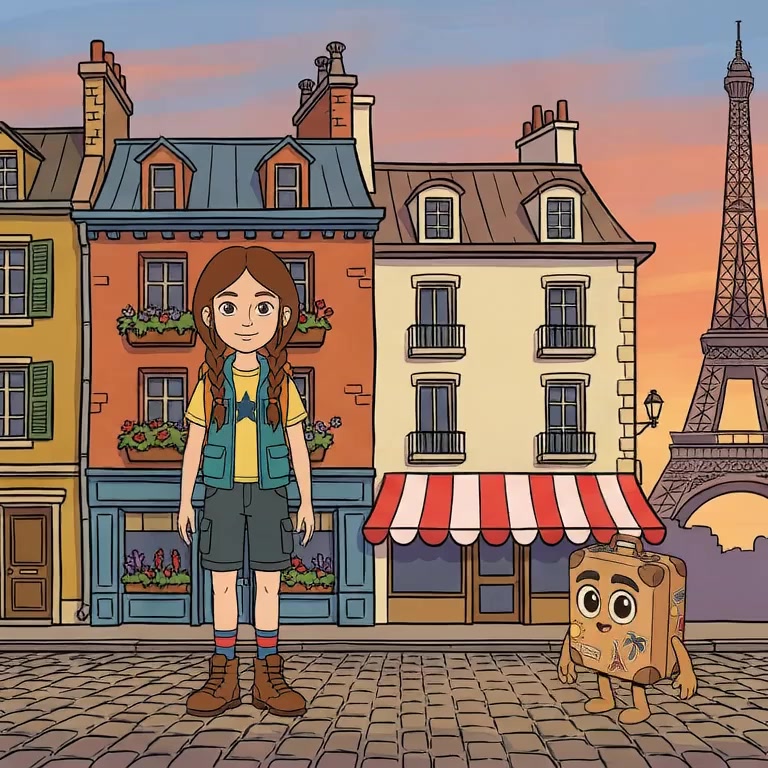
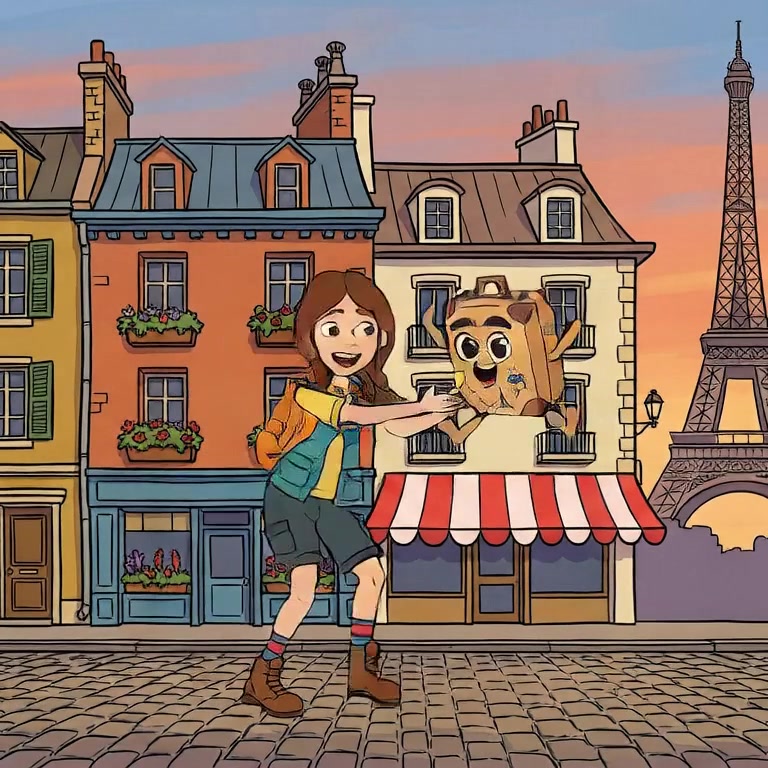
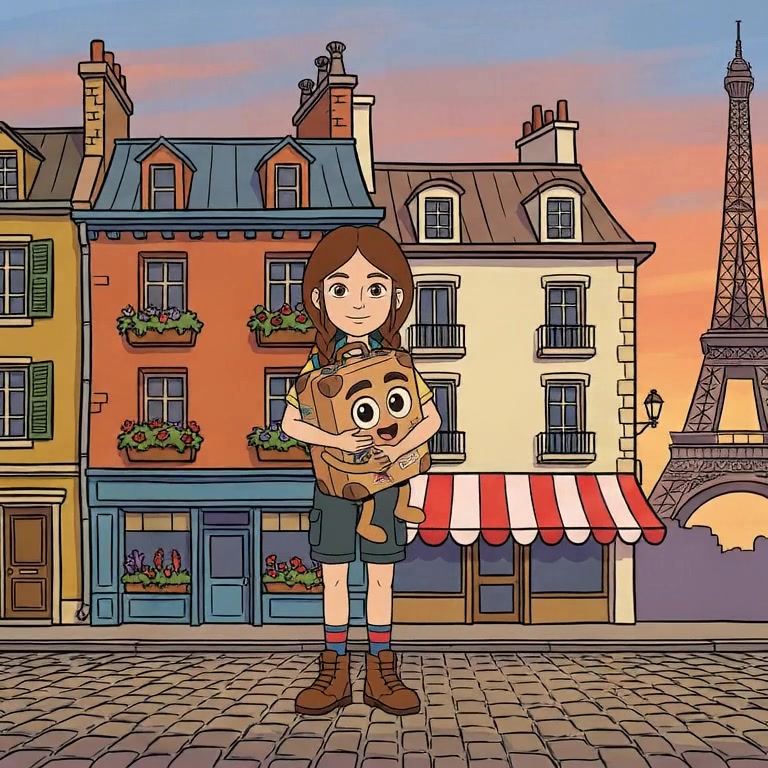
Whatever look you pick, declare it at the project level and hold it for the whole cartoon. A gag interrupted by a style wobble dies; the audience's eye goes to the inconsistency instead of the payoff.
A gag needs two things a clip generator cannot give you: the same character in the setup and the payoff, and control over the beat between them. Nima gives you both, because the cast is locked at the project level and the timing is the span you set between keyframes.
Fast is not funny; contrast is funny. The rules that survive from the hand-drawn era translate directly to span lengths: hold the setup longer than feels safe, snap the payoff faster than feels safe, and give the audience a full beat of stillness after the punchline to laugh in. In practice that is a long span, a very short span, and a keyframe that changes almost nothing.
Sound carries half the gag. A cartoon face can only mug so hard; the thud, the whistle and the perfectly timed line do the rest. Voices and mouth flaps are their own guide, linked below.
The one that holds your characters and style across shots and lets you set keyframes and timing. Single-shot cartoon generators produce clips; cartoons need the same cast and look across a whole story, which is a pipeline property rather than a model property.
It can draft them; it cannot judge them for you. Treat generated gag ideas as a writers' room pitch pile: cheap to produce, worth keeping one in ten, and always retimed by hand, because timing is where a gag lives or dies.
Gag cartoons breathe in 15 to 60 second episodes, which is also the shape short-form platforms reward. A classic seven minute cartoon is roughly a dozen gags on one premise, and it is exactly what the scene-by-scene method builds toward.
Nima holds one cast and one style across every gag, with keyframe timing down to the tenth of a second. Try it free.