Book trailer examples: from a 90-second film to a full chapter
The book trailers that work stage one scene instead of summarising the plot. Here are five animated examples, made from the text of classic novels: a 90-second Frankenstein film, a Three Musketeers trailer with five speaking characters, a Sherlock Holmes story filmed whole, an episode of Pride and Prejudice and the first chapter of Little Women. Each one is a different length and a different look, and each uses the author's own words.
Your first trailer is free.
1. Frankenstein: one image, held
The book: Mary Shelley, 1818. The look: claymation. Length: 1:27.
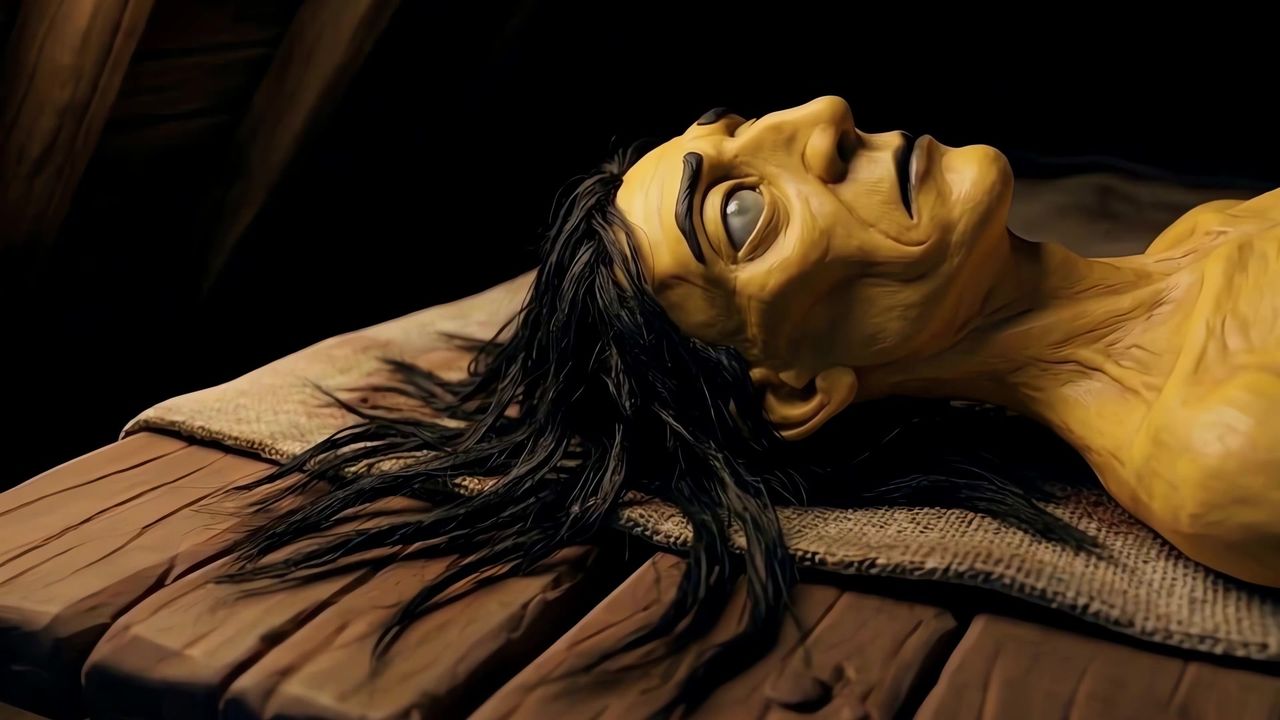
The film at the top of this page covers a single paragraph of the novel, the night the Creature wakes. Victor narrates in Shelley's words, "It was on a dreary night of November", and the camera stays in one garret: a candle, copper coils, the body under the sheet. Then the dull yellow eye opens, and Victor turns and speaks to the viewer.
What to borrow: a short trailer needs one image the viewer will remember tomorrow. Find the sentence in your book that people quote, and build the seconds that lead to it.
2. The Three Musketeers: a scene with a turn
The book: Alexandre Dumas, 1844. The look: paper love, which is cut paper. Length: 1:22.
One scene from chapter five. D'Artagnan arrives to duel Athos, Porthos and Aramis, the Cardinal's Guards interrupt, and he chooses a side. Five characters speak, each in their own voice, and every line is Dumas's, through to "Athos, Porthos, Aramis, and D'Artagnan, forward!"
What to borrow: a scene with a reversal in it is a complete story in 80 seconds. The costume details hold from shot to shot, Porthos's gold baldric, Athos's bandaged arm, and that consistency is what makes a cast feel like people.
3. Sherlock Holmes: when the trailer is the whole story
The book: Arthur Conan Doyle, The Red-Headed League, 1891. The look: claymation. Length: 33 minutes for part one, an hour in all.
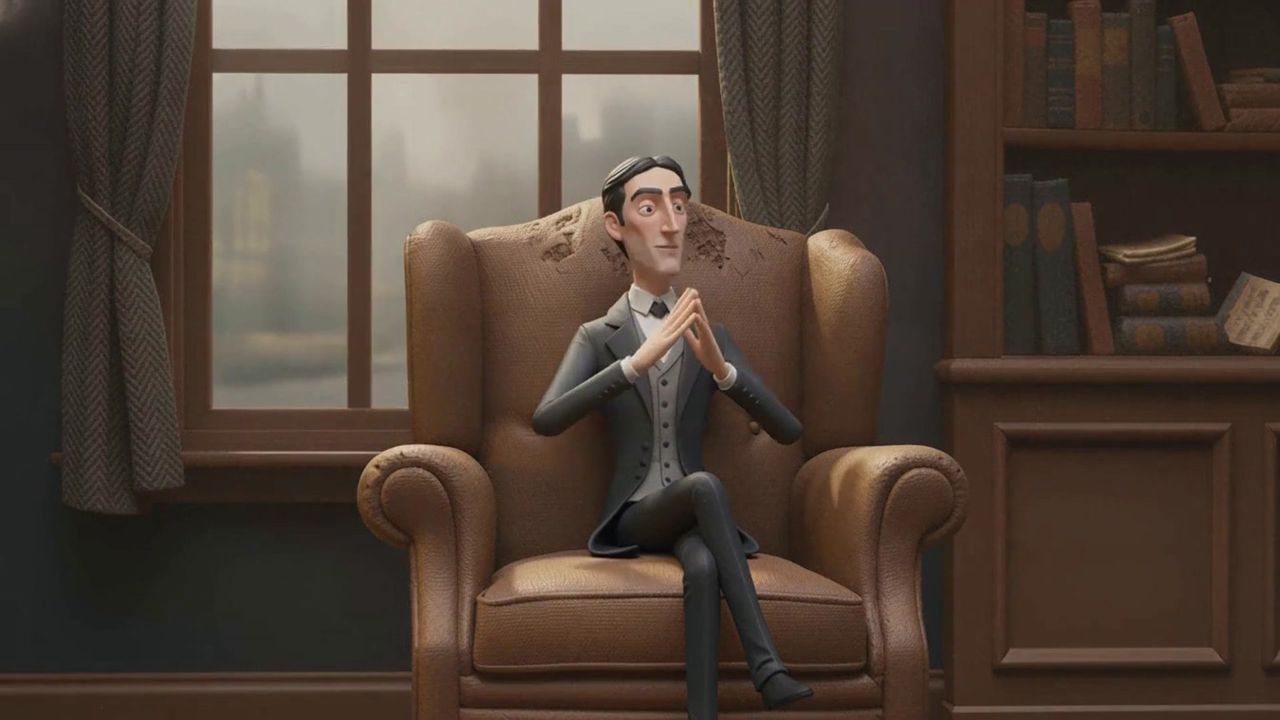
This is not a trailer. It is the short story filmed word for word, with Watson narrating and every character speaking their own lines. Holmes, Watson and Jabez Wilson keep the same faces for the whole hour, the sitting room at 221B lines up from every camera angle, and the newspaper advertisement is set in the story's exact words.
What to borrow: a short story is short enough to film whole. If you write short fiction, the adaptation can be the marketing. See how to make an animated audiobook.
4. Pride and Prejudice: an episode, not an advert
The book: Jane Austen, 1813. The look: felted wool. Length: 14:06.
Chapters one and two as one episode: Mrs Bennet wants Mr Bennet to call on the new tenant of Netherfield. It is nearly all conversation, which is what Austen is, and it works because the voices are cast as carefully as the faces. This one was built scene by scene in the Nima editor, before Long-form Video existed.
What to borrow: if your book lives in its dialogue, do not hide the dialogue behind sweeping shots. Let two people talk.
5. Little Women: a chapter in wool
The book: Louisa May Alcott, 1868. The look: felted wool. Length: 25 minutes.
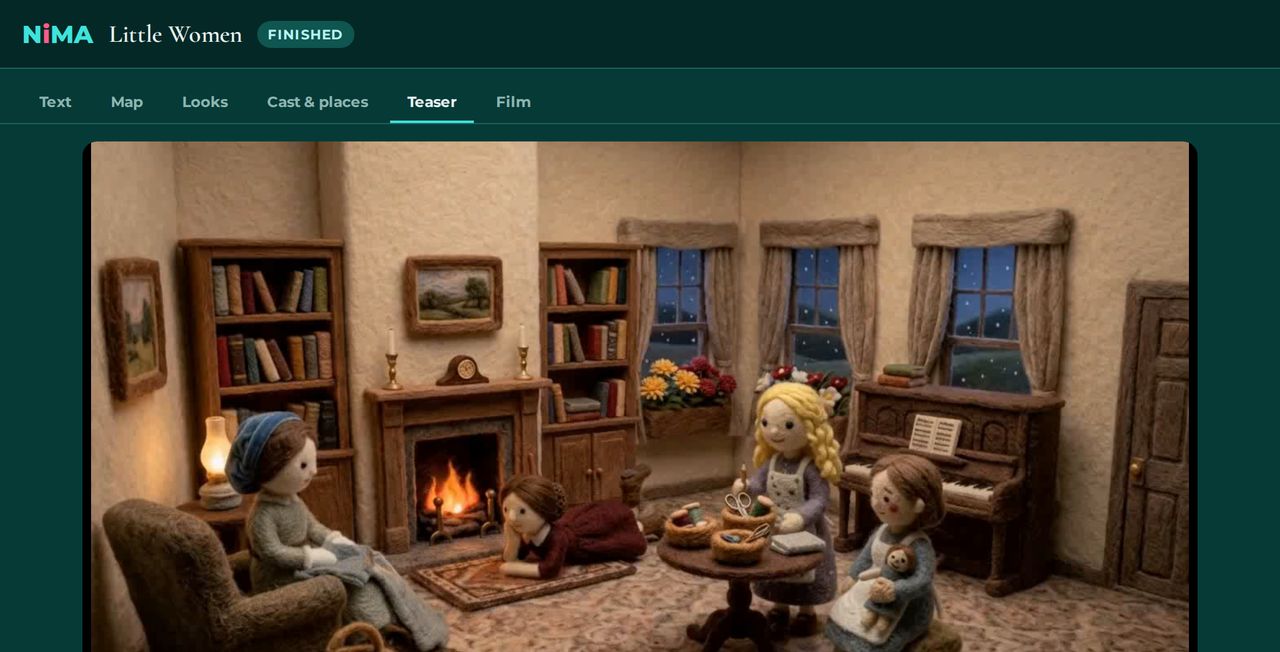
Chapter one, complete: four sisters, one room, a fire and a great deal of complaining. It was made in Long-form Video from the chapter's text. One sitting room carries nearly all of it, which is how a 25-minute film stays coherent: a room built once and seen from many angles.
What to borrow: a chapter that stays in one place is the cheapest and most convincing thing to film. Look for the scene in your book that never leaves the room.
What the five have in common
- One scene. None of them explains the plot.
- The author's words. No line was written for the trailer.
- Faces that hold. Each character is designed once and reused in every shot.
- A voice per character. You can tell who is speaking with your eyes shut.
- A look chosen for the genre. Clay for dread, paper for adventure, wool for home.
Make one from your own book
- Paste your pages. Open Long-form Video and paste the scene, chapter or short story you want filmed, between 150 and 10,000 words. Nima reads it, maps the scenes, the cast and the places, and asks before it cuts anything.
- Pick a look. Detailed claymation, felted wool, comic book ink, acid pencil, which is coloured pencil, or paper love, which is cut paper. Nima can draw your lead character and your main location in all five so you compare them side by side.
- Approve the cast and the places. Every character is drawn once, from the descriptions in your text, and every location is built once as a set. Leave a note on any picture and Nima redraws it.
- Pick the voices. Each speaking character gets five voice auditions, each one reading a line from your book. Choose the one that sounds like the person you wrote.
- Watch your free trailer. Nima cuts a trailer of 15 to 20 seconds from your text: several of its places and people, two or more of your lines spoken word for word, music under it, your title at the end. You see it first as a storyboard with the voices, give one round of notes, then start a free 7-day trial and it is fully animated. Nima emails you when it is ready.
- Make the film, if you want more. Pick a plan, metered in minutes of finished film, and Nima films the text scene by scene. You review a full draft with the voices, leave notes in each round your plan includes, then approve the render. The finished film is yours to download and share with a link.
Common questions
What makes a good book trailer?
One scene from early in the book, staged with the characters speaking the author's own lines, in a look that fits the genre, ending on the title and where to buy. Good trailers leave a question open instead of answering it.
Where can I watch examples of animated book trailers?
The Nima Animations channel on YouTube has the Frankenstein film, the Three Musketeers trailer, The Red-Headed League and Pride and Prejudice, and they are embedded on this page.
How were these book trailers made?
Frankenstein, The Three Musketeers and Little Women were made in Nima's Long-form Video from the novels' text. The Sherlock Holmes film is the project Long-form Video was built from. Pride and Prejudice was made scene by scene in the Nima editor. Each opens on a title card, which we make on request.
Can I make a trailer like these for my own book?
Yes. Paste a scene of 150 to 10,000 words into Long-form Video. The first trailer, 15 to 20 seconds, is free, and longer films are made on a monthly plan by the minute, from as low as $10 per finished minute.
Why are all the examples classic novels?
They are in the public domain, so the text can be filmed and published freely. The process is the same for a book you wrote and hold the rights to.
Your book can be the sixth example. Make my free trailer.